
Introduction to Screen Printing Inks
Screen printing inks are essential to one of the most widely used and mature printing techniques, known as screen printing, which involves a series of well-defined processes. These inks enable high-quality results across a variety of substrates with different shapes and sizes.
The process is highly flexible and reliable, making it suitable for diverse industrial applications. Available as one- or two-component systems, screen printing inks offer consistent color performance and excellent adhesion to materials such as plastic, glass, metal, and textiles.
Tools and Consumables Used in Screen Printing
Screen printing, processes, planar, roll-to-roll method, highly opaque, flexible materials, screen printing inks, Solvent based inks, UV curing inks, mesh, squeegee, innovative technique, ordinary process, substrates, screen printing process, screen printing inks for industrial applications, commercial applications, high printing quality inks, excellent transparency, flat-bed screen printing inks, Fabric printing ink, Adhesive based ink, Decorative and functional application, Innovative inks, Ink solution, Highly specialized screen printing ink for industrial application, Industrial application, Silicone-free inks, Flexible inks.
How Screen Printing Works Screen printing is a direct printing process that acted in a regular framework.
- Screen printing uses a mesh made of synthetic polymers like nylon or polyester.
- The mesh transfers the design onto the substrate using a blade and squeegee.
- This process defines the final printed image.

History of the Screen Printing Process
The screen-printing process was first derived in China, where silk was used on a wooden frame – also known as Silkscreen printing. Later on, it was used by many Asian countries.
Suitable Substrates for Printing Applications
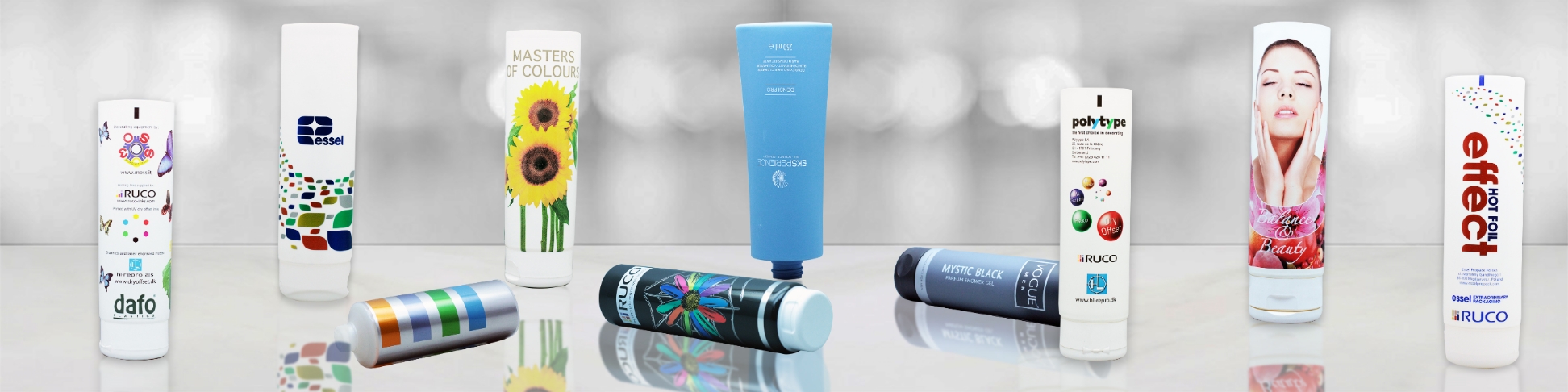
Screen printing is fit for imprinting on a wide range of flat and shaped substrates with varying shape and size, by taking advantage of the stencil.
- Screen printing can be used on a wide range of flat and shaped substrates.
- It works efficiently on materials of different shapes and sizes using stencil technology.
Application fields
- Screen printing is used in CDs, DVDs, and mobile devices.
- It is also applied in automotive parts and industrial components.
- Other applications include packaging, labels, textiles, and promotional items.
- It is widely used in electronics, medical products, and consumer goods.
Types of Screen printing inks

– Solvent-based inks: These inks are generally not ready to use and demand special thinners, hardeners, or retarders to be added. Small production can be greatly achieved by this solvent print set up. Solvent inks have excellent dealing with varying substrates, and can also offer greater opacity and performance requirements.

– UV inks or UV curing inks: These inks are mostly ready to use except that proper mixing is needed before its use. In special requirements, some additives need to be added for better results on different substrates. It offers a smaller footprint, quicker throughput, and easy control of the process. For display and graphical applications, UV inks seem to win out.

– UV LED curing inks: One of the major methods in trend nowadays, in which there is little heat so no cooling is required, which can be useful for some substrates like polycarbonate. LED curing inks are suitable for commercial applications only. This curing technique is a different choice over mercury light curing which, nowadays fundamentally used for curing of UV inks in the Narrow Web industry. It contributes huge advantages above mercury light restoring. UV LED inks can move on high-speed screen printing machines in contrast to ordinary UV screen inks.
Key Properties of High-Performance Inks
Glossy, highly covering, universally applicable, excellent flow, highly opaque, good curing and adhesion, low-migration, over printable, over paintable,color brilliance, high reactivity, low-odor, filling material resistance, scratch-resistant, abrasion-resistant, physically drying, mechanical and chemical resistance, alkali & solvent resistance, high light fastness, water resistance, weather resistance, dishwasher resistance, good adhesion after heat drying, ice and frost resistance, Phthalate-free, fluorine-free, bromine-free, Halogen-free, ITX, benzophenone- and 4-methylbenzophenone (4-MBP) -free, formulated free of BPA and many more.
Product/Color range
Basic colors, transparent white, process colors, opaque white, opaque black, silver, gold, copper, special effect inks, additives, bases, and much more possible to match in the spectrum.
Advantages and Limitations of the Process
– The thick covering is possible by using an extraordinary stencil which makes the color more visible, highly opaque, and excellent lightfastness. Though stencil is low in cost, which is the plus point for small industries to generate small quantities.
– Low production speed.
– Low stencil cost
– High production cost.
– Not suitable for printing on food packaging.
– Hard to clean.
– Enormous misuse of creation material (counting the ink).
– The greatest confinement is reflected in the degree of goals.
Compliance and Regulatory Standards:
Screen printing Ink must have to deem fit for printing application: Compliance with REACH regulation (SVHC), Compliant with the current European standard EN 71-3, Low PAH, RoHS compliant (2015/863/EU) // (2011/65/EU), Adidas A01, PUMA, ASTM-F963, HR4040.
Disclaimer:
This disclaimer informs readers that the views, information, and opinions expressed in the text belong solely to the experts or professionals working in the same field of study. However, the customers are required to test for themselves before going into productions. All the presented information stems from the rich and varied 30+ years of experience of spinks world in the printing business.

